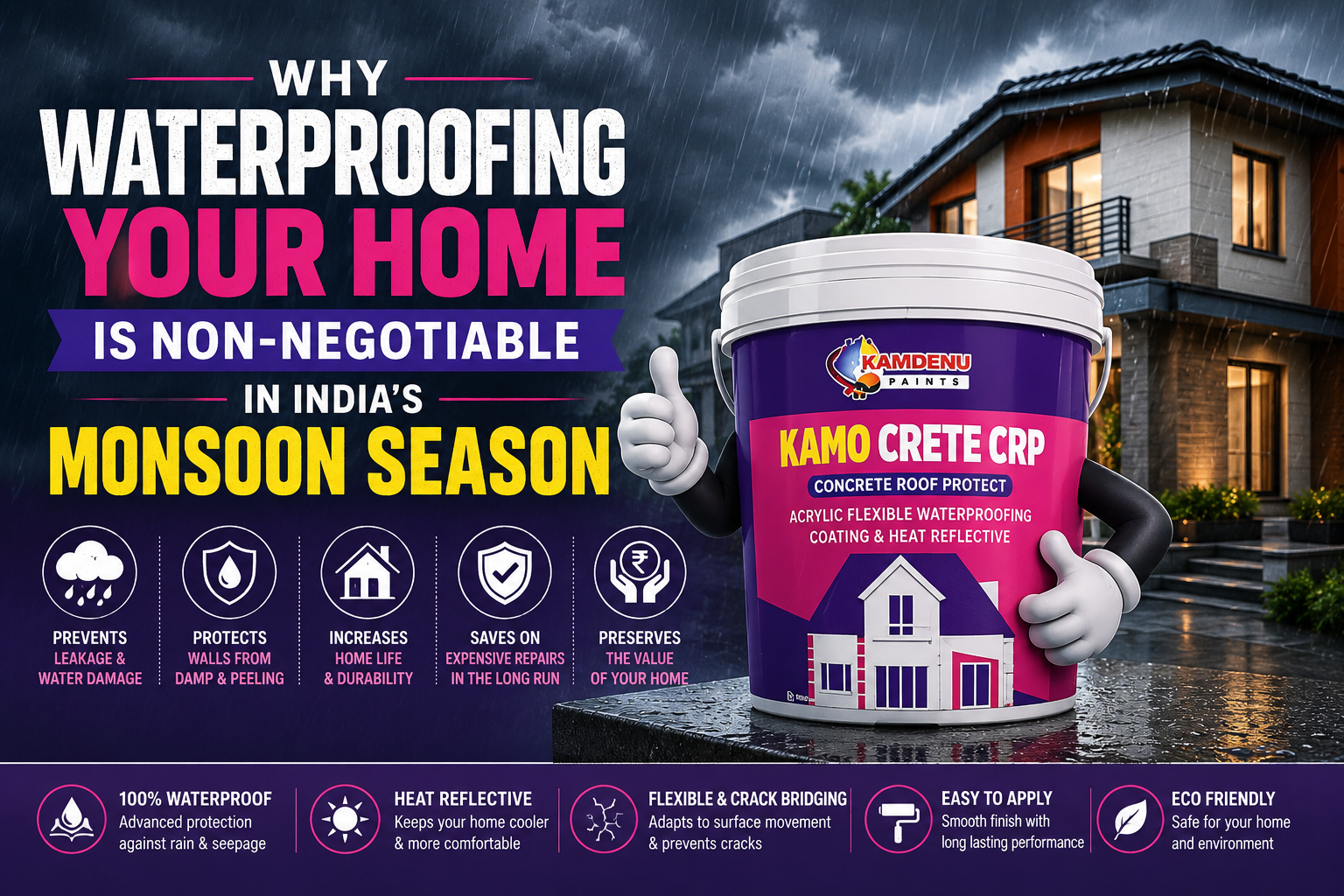
Why Waterproofing Your Home Is Non-Negotiable in India’s Monsoon Season
The monsoon brings relief from the summer heat.
But for many homeowners, it also brings leaking roofs, damp walls, peeling paint, fungal growth, and expensive repairs.
Every year, countless homes across India suffer water damage because waterproofing is ignored until the problem becomes visible. By the time damp patches appear on ceilings or paint starts bubbling on walls, the damage has often already spread beneath the surface.
That is why home waterproofing is no longer optional.
It is a necessary layer of protection that helps preserve your home’s structure, appearance, and long-term durability during India’s harsh monsoon conditions.
From roof leakage to wall seepage, moisture intrusion can slowly weaken buildings over time. Proper waterproofing helps prevent these issues before they turn into major structural problems.
This guide explains why home waterproofing in India is essential, the most common areas affected during monsoons, and how roof waterproofing and wall waterproofing help protect homes from long-term damage.
Why Indian Monsoons Damage Homes
India experiences intense seasonal rainfall, high humidity, and temperature fluctuations during monsoons. These conditions create continuous exposure to moisture, especially for exterior surfaces and rooftops.
Over time, water begins to penetrate small cracks, joints, and porous surfaces. Once moisture enters walls or roofs, it can lead to multiple issues inside the home.
Common monsoon-related problems include:
- Damp walls
- Ceiling leakage
- Peeling paint
- Mold and fungal growth
- Cracks in walls
- Water seepage
- Structural weakening
- Bad odor and humidity indoors
Without proper monsoon home protection, these problems continue worsening every season.
What Is Home Waterproofing?
Home waterproofing is the process of protecting different parts of a building from water penetration and moisture damage.
It involves applying specialized waterproofing materials and coatings to surfaces such as roofs, terraces, walls, bathrooms, and foundations. These systems create a barrier that prevents water from entering the structure.
Waterproofing is designed not only to stop visible leakage but also to protect the internal strength of the building.
In India’s climate conditions, waterproofing has become one of the most important preventive maintenance solutions for homes.
Why Waterproofing Is Non-Negotiable During Monsoons
Many homeowners treat waterproofing as a repair solution after leakage occurs. In reality, waterproofing works best as preventive protection.
Here is why it is essential before the monsoon season begins.
1. Prevents Structural Damage
Water seepage slowly weakens concrete, plaster, and reinforcement materials inside walls and roofs. Over time, trapped moisture can lead to cracks, corrosion, and reduced structural strength. Waterproofing helps prevent water penetration before long-term damage occurs.
2. Protects Interior Walls and Paint
One of the first signs of moisture damage is peeling paint or damp patches on interior walls. Wall waterproofing prevents external moisture from entering interior surfaces, helping walls remain dry and visually clean.
3. Reduces Mold and Fungal Growth
Humidity and dampness create ideal conditions for mold and fungus. These not only damage walls but can also affect indoor air quality and create unhealthy living conditions. Waterproofing minimizes moisture accumulation and reduces fungal growth.
4. Increases Building Lifespan
Continuous exposure to moisture accelerates building deterioration. Proper waterproofing helps extend the lifespan of the structure and reduces repair frequency.
5. Saves Long-Term Repair Costs
Fixing leakage and structural damage after monsoons is often expensive. Preventive waterproofing is significantly more cost-effective than repeated repairs every year.
Roof Waterproofing: Your First Line of Defense
The roof is the most exposed part of any home during monsoon season.
Heavy rainfall, standing water, and heat exposure can create cracks and seepage points over time. Once water enters the roof slab, leakage can spread to ceilings and interior walls.
Why Roof Waterproofing Matters
Roof waterproofing creates a protective layer that prevents rainwater from penetrating the surface.
Benefits include:
- Reduced roof leakage
- Protection against standing water
- Crack prevention
- Improved durability
- Lower maintenance costs
- Better resistance to weather damage
Common Roof Waterproofing Solutions
Different roof types require different waterproofing systems. Common solutions include:
| Waterproofing Type | Best For |
|---|---|
| Acrylic Coatings | Terraces and flat roofs |
| Polyurethane Coatings | High water exposure areas |
| Cementitious Waterproofing | Concrete surfaces |
| Bituminous Membranes | Heavy-duty roof protection |
Choosing the right system depends on roof condition, climate exposure, and budget.
Wall Waterproofing: Protecting Exterior and Interior Surfaces
Walls are constantly exposed to rainwater, humidity, and moisture absorption.
Over time, untreated walls absorb water through pores and cracks, leading to seepage inside the home.
Why Wall Waterproofing Is Important
Wall waterproofing helps protect both exterior and interior surfaces from water damage.
It offers:
- Protection from seepage
- Prevention of paint peeling
- Reduced damp patches
- Better resistance to fungal growth
- Improved wall durability
Exterior waterproof coatings are especially important in regions with heavy rainfall and high humidity.
Signs Your Home Needs Waterproofing
Many homeowners ignore early warning signs until damage becomes severe.
Here are some common indicators that your home may need waterproofing:
Damp Patches on Walls or Ceilings
Dark patches usually indicate water seepage behind surfaces.
Peeling or Bubbling Paint
Moisture trapped inside walls weakens paint adhesion.
Mold or Mildew Growth
Black or green spots often appear in damp corners and ceilings.
Cracks in Exterior Walls
Small cracks can allow rainwater to penetrate deeper into the structure.
Persistent Musty Smell
Excess indoor moisture often creates an unpleasant damp odor.
Addressing these signs early can prevent costly structural repairs later.
Areas of the Home That Require Waterproofing
Many homeowners focus only on roofs, but multiple areas require moisture protection.
Key Waterproofing Areas Include:
- Roofs and terraces
- Exterior walls
- Bathrooms
- Balconies
- Basements
- Water tanks
- Kitchen areas
- Window joints and gaps
A complete waterproofing strategy protects the entire structure more effectively.
Common Waterproofing Mistakes to Avoid
Improper waterproofing can reduce effectiveness and create recurring leakage issues.
Here are some common mistakes homeowners should avoid:
Delaying Waterproofing Until Leakage Appears
Prevention is always more effective than post-damage repairs.
Using Low-Quality Materials
Cheap products often fail quickly under harsh weather conditions.
Ignoring Surface Preparation
Cracks and loose surfaces should be repaired before waterproofing application.
Waterproofing Only One Area
Water seepage can spread through interconnected surfaces.
Hiring Untrained Applicators
Incorrect application can reduce durability and waterproofing performance.
Why Professional Waterproofing Matters
Waterproofing is not just about applying a coating.
It requires proper surface inspection, crack treatment, material selection, and application techniques. Professional waterproofing solutions ensure:
- Better adhesion
- Long-lasting protection
- Proper drainage handling
- Uniform application
- Improved durability
Expert waterproofing systems provide stronger monsoon home protection and reduce the risk of recurring leakage problems.
Final Thoughts
India’s monsoon season can severely impact homes if moisture protection is ignored.
From roof leakage to damp interior walls, water damage affects not only aesthetics but also the long-term strength of the structure.
That is why home waterproofing in India has become essential rather than optional.
Proper roof waterproofing and wall waterproofing help prevent seepage, protect surfaces, improve durability, and reduce long-term repair costs.
The best time to waterproof a home is before the monsoon arrives — not after damage becomes visible.
Because when it comes to protecting your home from rain and moisture, prevention always costs less than repair.
Latest Blog
Loading items...