Why Primer Is the Most Important Step in Any Painting Project
No matter how good the paint is, it cannot deliver the best results if the surface underneath is not properly prepared. This is why professionals always recommend using a primer before painting.
Understanding the importance of primer before painting can help you achieve a smoother finish, better paint coverage, and longer-lasting walls.
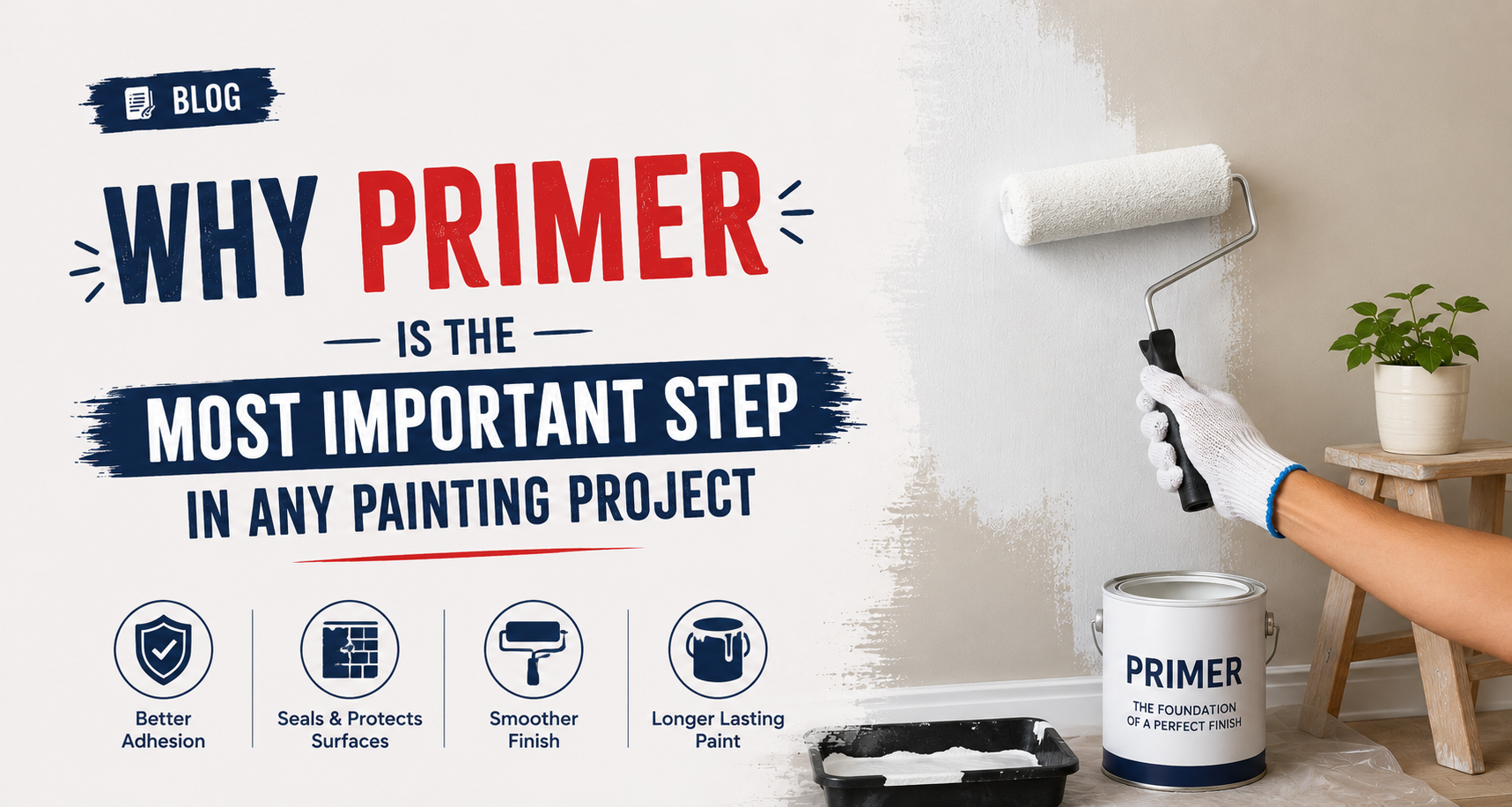
What Is a Wall Primer?
A wall primer is a preparatory coating applied before paint. It creates a strong bond between the wall surface and the paint, helping the paint stick better and perform as intended. Primer creates white base that helps paint look better and last longer. And because of its white colour it enhances the quality of main paint colour.
Why Is Primer So Important?
Primer is a bridge between uneven walls and smooth finish paint. Our walls may look smooth from the outside, but almost all walls contain small pores, patches, dust particles, or uneven surfaces. If paint is applied directly on such walls, the finish may not look uniform and desired. Primer helps solve these problems by preparing the surface before painting. Here are some of the key reasons why primer plays an important role in any painting project.
1. Improves Paint Adhesion
One of the main jobs of primer is to help paint stick properly to the wall. Paint bond evenly on the surface with the help of primer. Avoidance of primer can lead to peeling, flaking, or patchy areas over time. Primer creates a stable clean surface for the paint to adheres better and remains intact for a longer period.
2. Provides Better Coverage
Primer provides better coverage as it seals the uneven surface and reduces excessive absorption. As a result of this, the paint spread evenly on the primer surface and deliver consistent look & finish. This is one of the biggest reasons why professionals emphasize the importance of primer before painting.
3. Helps Reduce Paint Consumption
Primer is applied either on a raw surface or over old paint in the case of renovation. This means that one or sometimes two coats of primer are usually applied before the final paint colour. As a result, the wall absorbs the primer first, which reduces the absorption of the topcoat. This helps reduce paint consumption, as the main paint often requires only one coat or, at most, two coats to achieve a uniform finish.
4. Creates a Smooth and Uniform Finish
Primer is not only a great adhesive, but it is also a great coverup agent. When we do some wall repairs and putty work, minor imperfection always stays on wall and applying paint directly on that uneven patchy surface is not a good idea. This is where primer comes as a cover up agent and cover up all the imperfections the wall might have and delivers a smooth finish for the main paint. This results in smoother-looking walls and a more professional finish.
Whether you choose a matte, sheen, or glossy paint, if your surface is not smooth, it does not matter what finish you have chosen, because you will not get that finish without primer. The final finish largely depends on the preparation of surface.
5. Improves Paint Durability
A properly primed wall helps paint withstand daily wear and tear more effectively. When paint bonds better with the surface, it is less likely to peel, crack, or fade prematurely. This can help maintain the appearance of the walls for a longer time. For homeowners, this means fewer touch-ups and less frequent repainting.
When Should You Use Primer?
Primer should be used in almost every painting project, but it becomes especially important in certain situations.
New Walls
New walls need primer as a thirsty man need water. Freshly plastered walls remain highly porous in nature and can absorb direct paint unevenly. Primer helps seal the surface and prepares it for painting.
Repaired Walls
Areas that have been patched, filled, or repaired need cleanup to look even for a paint to perform on them. These areas often absorb paint differently from the surrounding wall. Primer helps create a uniform surface.
Colour Change Projects
If you are changing from a dark colour to a lighter shade, primer is must, as without primer you will not be able to hide the dark colour beneath the light colour even after 3-4 coats. Primer can improve coverage and help achieve the desired colour more effectively.
Chalky or Powdery Surfaces
Older walls may develop a chalky surface over time. Applying primer helps strengthen the surface before painting.
Types of Wall Primers
Choosing the right primer is just as important as using one.
Water-Based Primer
A water-based primer is commonly used for interior walls. It dries quickly, has low odour, and works well on new plaster, putty-coated surfaces, and previously painted walls. It is widely used in residential projects because of its ease of application and compatibility with modern water-based paints.
Solvent Primer for Walls
A solvent primer for walls is generally used when stronger sealing and adhesion are required. It performs well on difficult surfaces and can help improve paint bonding in areas exposed to challenging conditions. It is often chosen for specific surface requirements where extra durability is needed.
When selecting a primer, it is always best to follow the manufacturer's recommendations based on the wall condition and paint system being used.
How to Get the Best Results with Primer
Using primer correctly is important for achieving the desired outcome. Although this work is not yours but check if your labour is doing all the steps carefully or not because these steps will decide your end finish. Before applying primer:
- Your labour should clean the wall thoroughly.
- They should remove dust, grease, and loose particles.
- Repair cracks and holes properly.
- Allow damp areas to dry completely.
Once the surface is ready, they will apply the primer evenly and allow it to dry as recommended before applying paint. Make sure your labour allows enough time to set the primer properly on the surface. Because rushing through the preparation stage can affect the final finish, even when high-quality paint is used.
Final Thoughts
Primer is not an optional step, but it is actually one of the most important parts of any painting project. It helps paint adhere better, improves coverage, reduces paint consumption, and creates a smoother finish. It also helps walls maintain their appearance for a longer period.
Understanding the importance of primer before painting allows you to make better decisions and achieve better results from your painting investment.
Whether you choose a wall primer India homeowners commonly use, a water-based primer, or a solvent primer for walls, the right primer can help create a stronger foundation for beautiful and long-lasting walls. Primer is for everyone.
Latest Blog
Loading items...