Water-Based vs Solvent-Based Primer: How to Pick the Right One
Paint colour gets all the attention. Primer does not. Most people visit a paint shop and ask for a nice wall colour. Maybe they ask for matte finish, shine finish, or washable paint. But primer? That part is usually left to the painter. That is where many painting problems start.
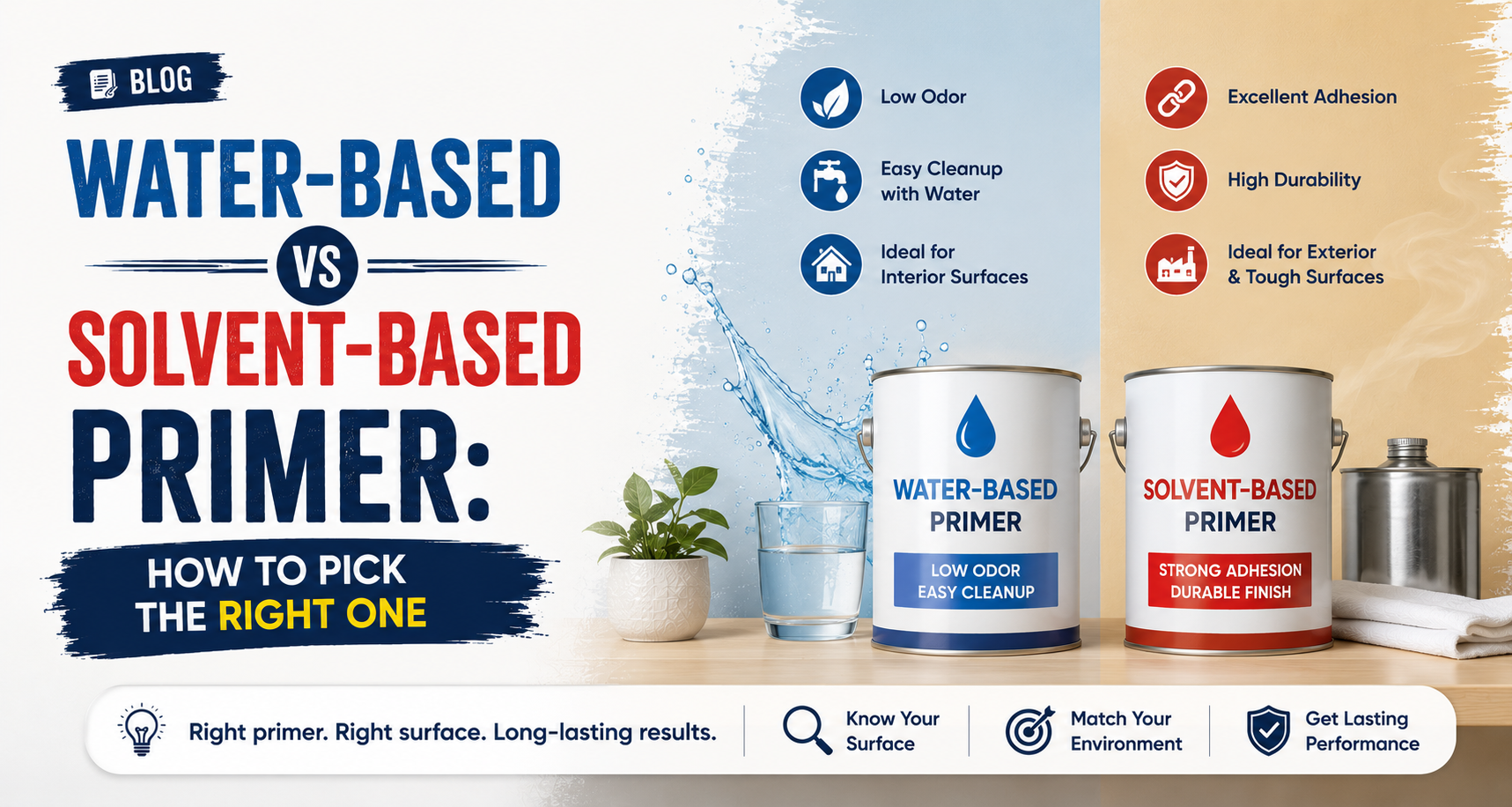
Primer normally comes in two types and buying one of the types according to your wall condition is very important. It comes in
- Water based primer
- Solvent based primer
That’s why it is important to understand about primer and it’s types to take an informed decision for your walls. Primer is the first coat that goes on the wall before the actual paint. It can go on a raw wall in a new house. It can also go on old painted walls when you are repainting or renovating the space.
Simple thing, but very important
If the wall is raw, it absorbs paint quickly. If you apply the final colour directly, the wall may drink too much paint. Then the finish looks patchy and the painter may need more coats. But when primer goes first, the wall absorbs the primer. After that, the main paint sits better on the surface. So yes, primer can also reduce paint consumption.
Now the real question comes. Should you use water-based primer or solvent-based primer?
What Does Primer Actually Do?
Primer prepares the wall. That is the easiest way to understand it. A wall may look clean from outside, but it can still have pores, dust, patches, repaired areas or uneven absorption. New plastered walls are especially absorbent. Old walls can also become powdery or weak with time.
Primer helps in such cases. It seals the surface. It helps paint stick better. It also gives a more even base, so the colour looks cleaner after painting. Without primer, even a good paint may not give the result you expected.
What Is Water-Based Primer?
Water-based primer is a primer where water is used as the main base. It is commonly used for interior walls. Bedrooms, living rooms, dining rooms, study rooms — these areas usually work well with water-based primer.
- It dries faster.
- It smells less.
- It is easier to apply.
That is why many painters prefer it for normal home painting work, especially when the family is already living in the house. For most regular walls inside Indian homes, a good interior wall primer is usually enough before applying emulsion paint.
When Should You Use Water-Based Primer?
Use water-based primer when the wall condition is normal. For example, if you are painting a new flat and the plaster work is complete, water-based primer is commonly used before the final paint. It works well as a primer for new construction, especially on interior walls.
It also works during repainting if the old paint is not peeling, the wall is dry, and there is no major dampness issue. So, if the room is simple and the wall is in decent condition, water-based primer does the job nicely. No need to overcomplicate it.
What Is Solvent-Based Primer?
Solvent-based primer is different. It uses solvent as the base and is usually stronger in sealing the surface. It is used where the wall needs extra support before painting.
- The smell is stronger.
- Drying may take more time.
- Application also needs more care.
But sometimes, this is exactly what the wall needs. Old walls, chalky walls, exterior walls, or surfaces that need stronger bonding may require solvent-based primer.
When Should You Use Solvent-Based Primer?
Use solvent-based primer when the surface is difficult. Exterior walls are a good example. They face heat, dust, rain, moisture and sunlight. A normal interior primer may not be the right choice there. That is why painters often use a suitable exterior primer for outside walls.
Solvent-based primer can also help when the wall surface feels powdery. You may have seen this in old homes. Touch the wall and white dust comes on your hand. Paint should not go directly on such a surface. First, the wall needs a proper base. That is where solvent primer can help.
Water Based vs Solvent Primer: Which One Is Better?
There is no straight winner in water based vs solvent primer. Both are useful.
- Water-based primer is good for normal interior walls. It is easy, quick and comfortable for home painting.
- Solvent-based primer is better when the wall needs stronger sealing or when the surface is exposed to tougher conditions.
So, do not choose primer only by name. Look at the wall first.
- Is it new or old?
- Inside or outside?
- Dry or damp?
- Smooth or chalky?
These small checks make the decision easier.
Difference Table
| Feature | Water-Based Primer | Solvent-Based Primer |
|---|---|---|
| Drying Time | Faster | Slower |
| Odour | Low | Stronger |
| Cleanup | Water | Solvent required |
| Interior Use | Excellent | Suitable when needed |
| Exterior Use | Suitable for selected systems | Commonly preferred |
| Environmental Impact | Lower VOC options available | Generally higher VOC |
| Ease of Application | Easy | Requires more care |
A Simple Way to Choose
Look:
- For new interior walls, go with water-based primer in most cases.
- For old weak walls, ask the painter if solvent primer is needed.
- For exterior walls, choose a proper exterior primer.
- For repainting, check the old paint condition first. If it is strong, water-based primer may work. If it is loose or powdery, the wall needs more preparation.
That’s it.
No confusion.
Final Thoughts
Primer may look like a small step, but it affects the whole painting result. It helps the paint stick better, reduces uneven absorption and improves the final finish. It can also reduce extra paint usage because the wall does not absorb the final colour as much. Water-based primer works well for most interior walls. Solvent-based primer works better for tough surfaces and exterior areas. So before choosing the paint colour, choose the right primer. The colour comes later. The base comes first.
Latest Blog
Loading items...