Textured Wall Paint: Trending Designs and How to Apply Them at Home
A textured wall can completely change how a room looks. It can turn a plain wall into a feature wall. It can make a simple bedroom feel more premium. Sometimes, one textured wall creates more impact than an entire room painted in bold colours.
The good part?
Not every textured finish requires a large renovation. Many textured paint designs can be created with paint, simple tools and the right technique. Let's understand some popular options and how they can be used in your home. Our goal here is to give you some budget friendly ideas of texture paint so that you can renovate your home or just a room without thinking much.
What Is Textured Wall Paint?
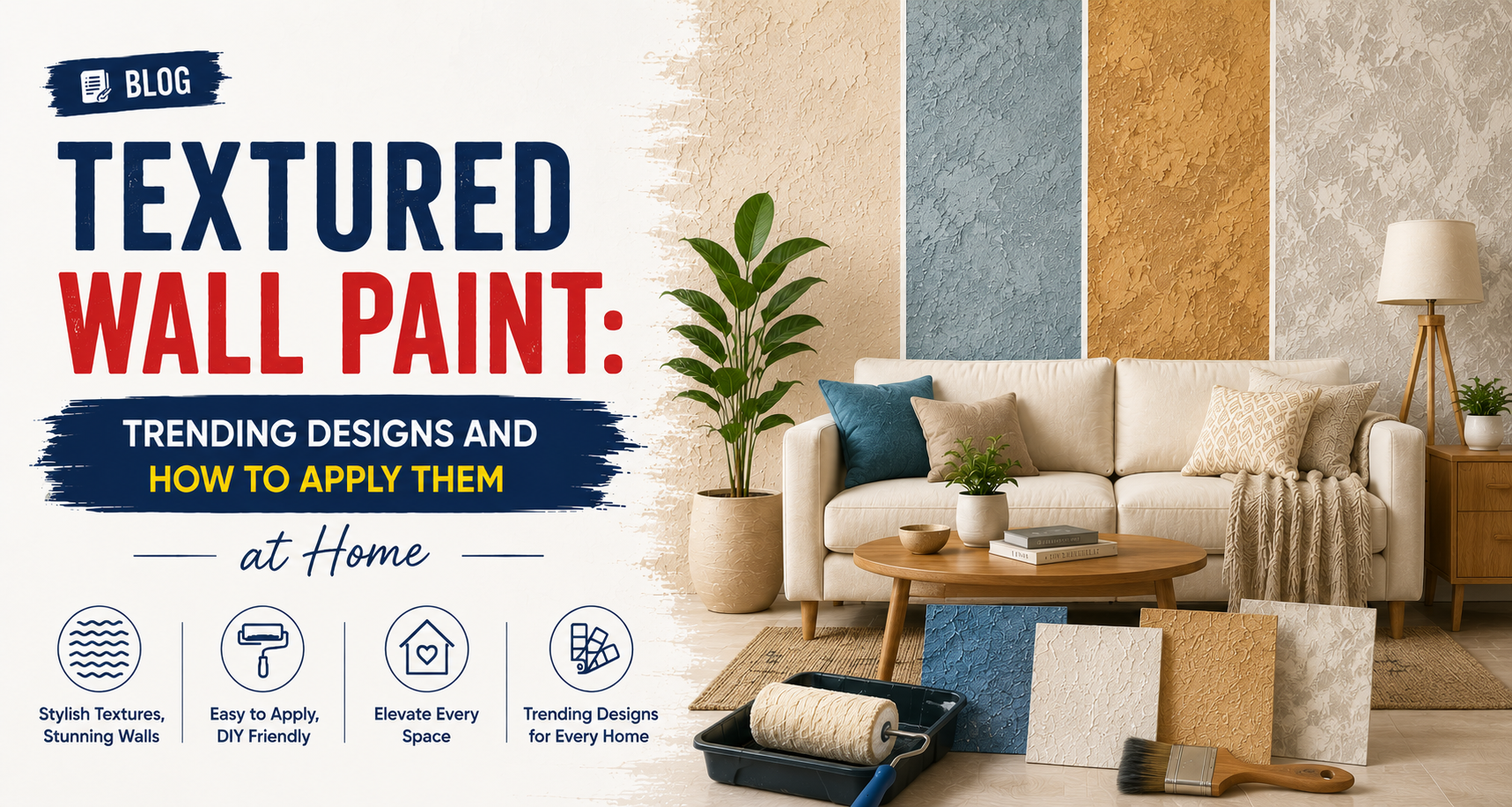
Textured wall paint is a decorative finish that creates patterns, depth or surface effects on a wall. Unlike regular paint, which leaves a smooth surface, textured paint creates visual movement and dimension. Sometime less and sometime more, depending on the design you select. There are lot of examples of textured wall such as stone-like appearance, concrete patterns, metallic effects or even a 3D wall texture effect.
Why Are Textured Walls Becoming Popular?
People today want unique interiors but in budget. Textured walls are capable to deliver exact the same requirement. They also help break the monotony of large wall surfaces. Instead of filling a room with expensive décor items, many people now use textured finishes to create a focal point. A single textured wall behind a sofa or bed can completely transform a room. Or sometime a corner of the room.
Popular Textured Paint Designs for Modern Homes
There are many types of textured finishes available today. Some work better in modern interiors, while others suit traditional spaces.
Concrete Finish
The concrete look has become very popular in contemporary homes. It creates a raw, industrial appearance while still looking elegant. Grey shades are commonly used for this finish. People are using this finish for exterior walls more than the interiors. It gives a raw yet premium look. This texture works particularly well in:
- Living rooms
- Home offices
- Modern apartments
Stone-Inspired Texture
This finish mimics the appearance of natural stone. It adds depth and richness to the wall without using actual stone cladding. Many homeowners choose this style for TV unit walls and entrance areas.
Sand Texture
A sand-textured finish creates a soft grainy effect on the surface. The texture is subtle rather than dramatic. This makes it suitable for homeowners who want something different without making the wall look too busy.
Metallic Texture
Metallic textured finishes combine texture with light-reflecting effects. As light falls on the wall, the surface appears to change slightly throughout the day. This finish is often used in luxury interiors and feature walls.
3D Wall Texture
A 3D wall texture creates raised patterns that add depth and dimension to the surface. These designs can include geometric shapes, waves, layered effects and abstract patterns. When combined with proper lighting, 3D textures can become the main attraction of a room.
Which Rooms Are Best for Textured Walls?
Not every wall needs texture. In fact, using texture on all four walls can sometimes make a room feel crowded. Most designers recommend limiting textured finishes to selected areas.
Living Room Feature Walls
This is probably the most common application. A textured wall behind the sofa or TV unit instantly draws attention and creates a focal point.
Bedroom Headboard Walls
Many homeowners use textured finishes behind the bed. This adds depth without making the room feel overwhelming.
Dining Areas
Textured finishes can make dining spaces look warmer and more sophisticated.
Entrance and Foyer Walls
First impressions matter. A textured entrance wall creates an elegant welcome for guests.
Things to Consider Before Choosing a Texture
A texture may look beautiful in a showroom.
But your home is different.
Before selecting a finish, consider:
- Room size
- Available lighting
- Furniture style
- Wall location
- Maintenance requirements
A heavily textured wall may work beautifully in a large living room but feel overwhelming in a small bedroom.
Balance is important.
Can You Apply Textured Paint at Home?
Yes. Some textured finishes can be created as DIY projects. However, the difficulty level depends on the design. Simple textures are easier to achieve. Complex designer finishes often require professional application. If you are trying texture for the first time, start with a small wall rather than an entire room.
How to Apply Textured Paint at Home
The exact process depends on the texture type, but the basic preparation remains similar.
Step 1: Prepare the Wall
The wall should be clean, dry and smooth.
Repair cracks, holes and uneven areas before starting.
Any imperfections left on the wall may become more visible after applying texture.
Step 2: Apply Primer
Primer creates a stable base for the texture.
Allow the primer to dry completely before moving to the next step.
Skipping primer can affect adhesion and finish quality.
Step 3: Apply the Texture Material
This is where the design starts taking shape.
Depending on the product, texture can be applied using:
- Rollers
- Trowels
- Texture brushes
- Sponges
- Special texture tools
Different tools create different patterns.
Always follow the manufacturer's instructions for the specific texture system being used.
Step 4: Let It Dry Properly
Do not rush this stage.
Allow the textured surface to dry completely before applying any topcoat or decorative finish.
Drying time may vary depending on the product and weather conditions.
Step 5: Add Colour or Decorative Effects
Some textured finishes are painted after the texture dries.
Others come pre-coloured.
Additional decorative effects such as metallic highlights or dual-tone finishes can also be added at this stage.
Common Mistakes to Avoid
A few mistakes can affect the final appearance.
Try to avoid:
- Applying texture on uneven walls
- Skipping primer
- Choosing very bold textures for small rooms
- Using texture on every wall
- Rushing the drying process
Sometimes less is more.
One well-designed textured wall often creates a better result than covering an entire room.
Are Textured Walls Difficult to Maintain?
Not necessarily.
Most modern textured finishes are designed for long-term use.
However, deep textures may collect slightly more dust than smooth walls.
Regular dusting and occasional cleaning are usually enough to maintain their appearance.
The maintenance requirement depends on the texture depth and finish type.
Final Thoughts
Textured walls have become one of the most popular interior design trends in recent years.
From subtle sand effects to bold 3D wall texture designs, these finishes can add depth, personality and visual interest to any room.
The key is using them strategically.
Instead of applying texture throughout the house, focus on feature walls where the design can make the biggest impact. Whether you choose modern concrete effects, metallic textures or other designer wall finishes, a well-executed texture can transform an ordinary wall into a standout design element.
For homeowners looking to move beyond plain paint, textured wall paint India offers endless possibilities to create unique and stylish interiors.
Latest Blog
Loading items...