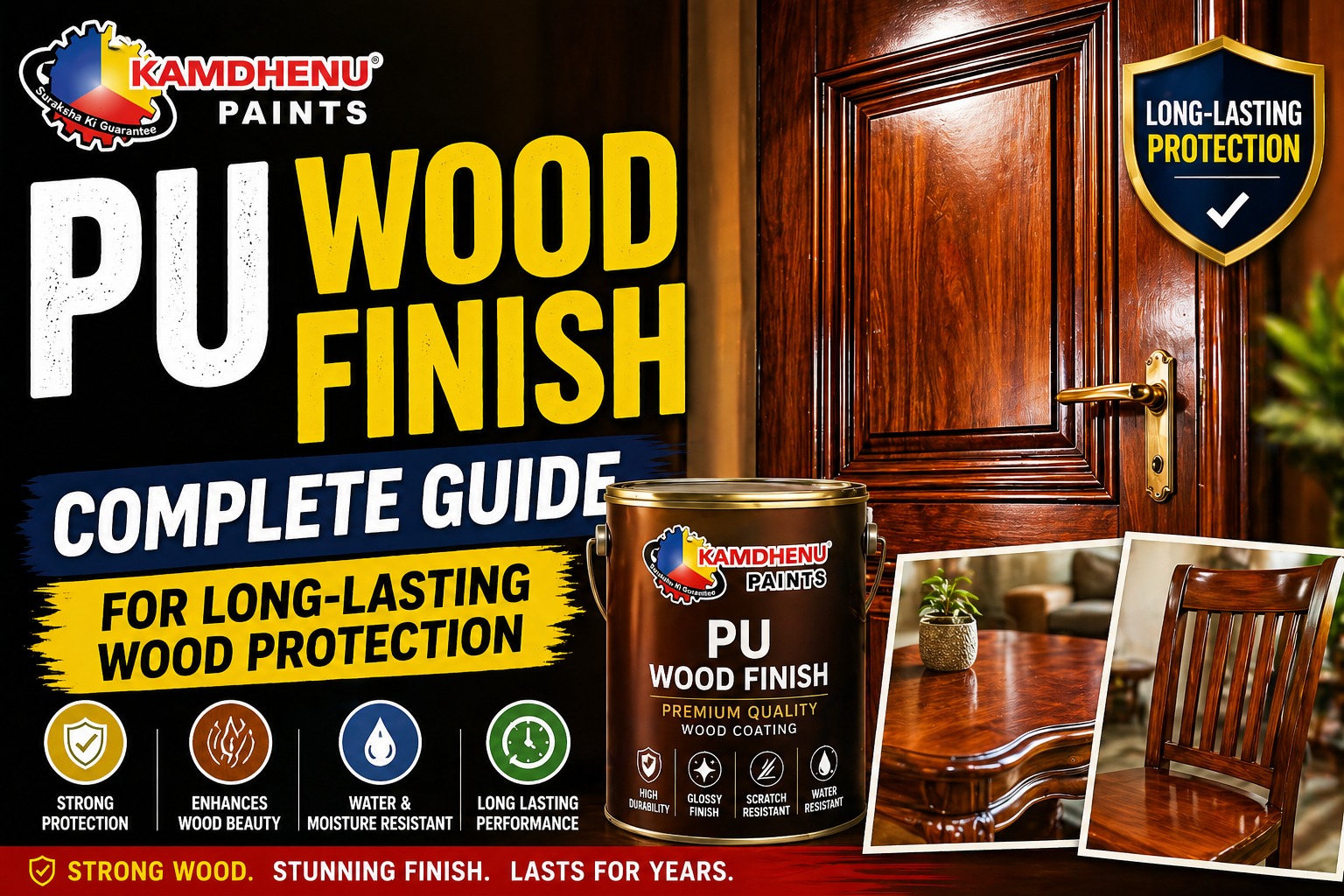
PU Wood Finish: Complete Guide for Long-Lasting Wood Protection
Wood survives on beauty & asthetic looks, but it fails on exposure external effect.
That is the contradiction. We choose wood because it feels warm, natural, and permanent. But wood is not naturally permanent in the way people imagine. It is porous. It responds to humidity. It marks under friction. It absorbs stains. It loses surface quality through use. So the question is not whether wood needs protection. The question is what kind of protection can preserve both its structure and its appearance.
This is where PU Wood Finish matters.
A good PU polish for wood does not merely make wood look polished. It creates a protective film over the surface so that the wood underneath is less exposed to scratches, climate change, moisture, stains, and daily wear. That is why PU is widely used on furniture, doors, cabinets, wardrobes, and modular kitchens. These are not static surfaces. They are handled, wiped, opened, shut, leaned on, and cleaned. Therefore, they need a finish that can tolerate use, not just decorate it.
To choose PU well, one must first understand what problem it solves.

What PU Wood Finish Is
PU Wood Finish is a polyurethane-based coating applied to wood in order to protect the surface and improve its finish quality. Once it dries and cures, it forms a hard, smooth layer over the substrate. That layer acts as a protective & decorative barrier.
This matters because bare wood is not only visually unfinished; it is physically exposed. If water, oil, dirt, or abrasion reaches the wood directly, the wood begins to deteriorate in appearance and, over time, in performance. A PU coating reduces that direct contact. Therefore, it extends the life of the wood surfaces.
This is also why PU polish for wood is not the same thing as traditional polish in the casual sense. Traditional polish may improve gloss or enrich colour for some time, but PU is chosen when the requirement is stronger: protection plus asthetic decorative finish retention.
One beautifies the surface. The other protects the surface so that the beauty lasts.
Why Wood Needs Protection
Wood needs finishing because it has three weaknesses built into its nature.
First, it is porous. That means it can absorb moisture from the air or from spills. When wood takes in moisture, it can swell, stain, or lose dimensional stability. Therefore, any effective finish must reduce moisture ingress.
Second, wood is softer than many other interior materials. A dining table, cabinet shutter, or wooden armrest picks up scratches not through one dramatic event, but through repetition. Plates slide. Hands rub. Keys graze. Cleaning cloths abrade. Therefore, the finish must add surface resistance.
Third, wood holds stains. If tea, oil, grease, or hand oils are absorbed into the surface, the damage is not always easy to reverse. Therefore, the coating must also function as a stain barrier protective layer.
So a good finish for wood must do four things at once:
it must seal, strengthen, preserve & decorataes
That is exactly why PU Wood Finish became important in interior wood care. It answers all three needs in one system.
How PU Wood Finish Protects Wood
PU works because it creates a continuous protective film over the wooden surface.
This film matters in a very practical way. If the film is hard enough, the surface resists abrasion better. If it is dense enough, moisture and stains are less likely to reach the wood. If it is optically clear, the grain remains visible while the wood is being protected.
That combination is the real value of PU polish for wood.
A weak finish usually fails in one of two ways. Either it does not protect the wood sufficiently, or it protects it but kills the appearance. PU is preferred because it tries to avoid both failures. It protects the surface, but it still allows the wood to look like wood.
That is why good PU-coated wood often looks deeper, cleaner, and richer. The effect is not only from shine. It comes from clarity, film smoothness, and grain enhancement.
Why PU Is Preferred for Furniture and Interior Woodwork
PU is preferred not out of fashion, but out of use logic.
Furniture needs better protection than many people assume because it is handled constantly. A decorative wooden panel on a wall and a dining table do not live the same life. The panel is seen. The table is used. Therefore, the table needs more than a pleasant finish; it needs a durable finish.
The same is true for wardrobes, shutters, and kitchen cabinets. These surfaces face repeated handling, friction, and cleaning. In kitchens, the demand is even greater because the surface must also tolerate moisture, vapour, and grease. So a finish with better film strength and better stain resistance becomes more practical.
This is the central mistake many buyers make: they choose a finish by showroom appearance alone. But a finish should be selected by exposure & durbality first, appearance second. If the use is demanding, the coating must be strong. Otherwise, the finish will look good only briefly.
Difference Between PU Wood Finish and Traditional Wood Polish
The comparison between PU and traditional polish becomes clearer once the purpose is defined.
If the purpose is temporary surface enhancement, traditional polish may seem sufficient. But if the purpose is long-term surface protection, PU Wood Finish is usually the stronger option.
That is because PU forms a harder and more durable coating. It offers better scratch resistance, better stain resistance, and better moisture resistance. Traditional wood polish may enrich the look of the wood, but it usually does not create the same level of durable surface film.
So the difference is not just aesthetic. It is structural.
A traditional polish can improve appearance. A PU polish for wood improves appearance because it protects the wood better.
That “because” is the whole point.
Types of PU Wood Finish
The right PU finish depends on what the user wants the wood to do visually, and what the surface is expected to tolerate physically.
Gloss PU Wood Finish
Gloss PU creates a reflective, rich-looking surface. It is chosen when the wood needs visual depth and a more formal appearance.
It works well on decorative furniture, premium wardrobes, and statement wood panels because the reflected light makes grain and colour look more dramatic.
But gloss also reveals more. It shows dust, surface waviness, fingerprints, and fine scratches more readily. Therefore, gloss is best used where appearance is important and surface preparation is excellent.
Matte PU Wood Finish
Matte PU reduces reflection so that the wood looks softer, quieter, and more contemporary.
This is why matte is popular in modern interiors. It makes furniture look refined without looking flashy. It also hides minor surface irregularities better than high gloss. Therefore, it is often a more forgiving choice for wardrobes, panels, and minimalist furniture.
But matte must still be chosen carefully. A poor matte finish can look dead instead of elegant. So the quality of the product and the skill of application still matter.
Satin PU Wood Finish
Satin sits between matte and gloss. It provides some sheen, but not enough to become loud.
This makes satin practical because it balances beauty and usability. It gives the wood some richness, but it does not expose every defect the way gloss can. Therefore, satin is often the safest choice for everyday furniture, doors, and cabinets.
If gloss feels excessive and matte feels too subdued, satin is usually the middle ground that works.
Clear PU Coating
A clear PU coating is used when the natural appearance of the wood should remain visible.
This is important because not all wood surfaces should look “finished” in the glossy sense. Some should simply look protected. A clear coating does exactly that. It preserves the grain and general character of the wood while adding a protective layer over it.
So when the material itself is the hero, clear PU is often the right answer.
How to Choose the Right PU Wood Finish
The right finish is chosen by dependency, not preference alone.
Start with the surface. A dining table needs scratch and stain resistance because it faces plates, spills, and cleaning. A kitchen shutter needs resistance to moisture and grease because the environment is harsher. A decorative wooden panel needs clarity more than impact resistance because it is touched less and seen more.
Once the use is clear, the finish type becomes easier to choose.
Then consider the look. If the wood should appear rich and dramatic, gloss may suit it. If the design language is modern and understated, matte may be better. If the requirement is balanced, satin usually makes sense.
Then consider maintenance. Gloss can look luxurious, but it also shows more. Matte looks quieter, but on some heavily used surfaces, the wrong matte system may not wear as gracefully. So the right finish is always a negotiation between appearance and use.
This is why one should not ask, "Which PU finish is best?" The better question is, "Best for what?"
How Surface Preparation Affects the Final Result
A finish is only as good as the surface beneath it.
This matters because PU does not correct poor preparation. It reveals it. If the wood is uneven, the gloss will amplify the problem. If dust remains on the surface, the finish will trap it. If sanding is careless, the final coating will not look premium no matter how expensive the product is.
Therefore, surface preparation is not a preliminary step to be rushed through. It is part of the finish itself.
The surface must be cleaned, sanded, and made uniform. If the wood is open-grained or uneven, fillers or sealers may be needed. These steps are necessary in order to create a stable and smooth base for the PU topcoat.
That is why two pieces of furniture coated with the same PU can look entirely different. The difference is often not in the can. It is in the preparation.
How PU Wood Finish Is Applied
A proper PU system follows a sequence because each layer depends on the one below it.
The surface is first sanded so that dust, roughness, and inconsistencies are removed. Then a sealer or primer is applied in order to improve adhesion and control absorption. If the wood absorbs unevenly, the topcoat will also behave unevenly. Therefore, sealing is important.
After that, the first coat of PU polish for wood is applied. Once dry, the surface is lightly sanded again. This is done not out of ritual, but out of reason: intermediate sanding removes minor roughness and helps the next coat sit more evenly.
Then the final coat or coats are applied.
The last dependency is curing. A PU surface may feel dry before it is fully cured, but those are not the same thing. A finish that is touched too early, cleaned too aggressively, or loaded before curing can lose performance. Therefore, drying time is not enough; curing time matters too.
Common Mistakes in PU Wood Finishing
Most problems in wood finishing happen for ordinary reasons.
People apply PU on poorly prepared surfaces, and then wonder why the finish looks uneven. They choose gloss for a surface that is not smooth enough, and then the gloss magnifies every flaw. They use incompatible sealers and topcoats, and then adhesion suffers. They rush drying and curing, and then the finish underperforms.
In each case, the mistake is the same: the person treats the finish as a product, not as a system.
But wood finishing is always a system. One stage depends on the previous one. Therefore, if the base is careless, the finish will be compromised no matter how premium the PU is.
How to Maintain PU-Finished Wood
PU is durable, but durability still depends on sensible care.
The surface should be cleaned with a soft cloth because abrasive scrubbers can damage the film over time. Spills should be wiped early so that they do not sit on the surface unnecessarily. Harsh chemicals should be avoided because resistance does not mean immunity. Heavy objects should use pads where needed in order to reduce concentrated surface stress.
So maintenance is simple, but it is not irrelevant. Good finish plus basic care is what gives wood long life.
Why PU Wood Finish Is Useful in Modern Interiors
Modern interiors make difficult demands. They want warmth, but they also want durability. They want elegance, but not constant maintenance. They want wood to look natural, but they do not want it to behave like an unprotected natural material.
That is precisely why PU Wood Finish fits the modern home so well.
It gives wood a defensive layer so that the surface can survive ordinary life. But because the film is clear and refined, it still allows the grain, depth, and character of the wood to remain visible.
That balance is not trivial. Many protective systems become heavy-handed. They protect, but they suffocate the material. PU works well when it protects without erasing.
Conclusion
Wood does not become durable just because it is beautiful.
It needs protection because beauty alone cannot resist moisture, scratches, stains, and repeated use. Therefore, a wooden surface that is expected to last must be finished with a coating that can perform, not merely decorate.
That is the real value of PU Wood Finish.
A good PU polish for wood creates a hard and clear protective layer over the surface. It is useful because wood is porous, vulnerable, and constantly exposed to wear in daily life. It is preferred for furniture, cabinets, doors, wardrobes, and kitchens because these surfaces require both visual refinement and physical protection. Matte, satin, gloss, and clear finishes all have their place, but the right choice depends on the relationship between use, appearance, and maintenance.
So the intelligent way to choose PU is not to ask which finish looks most premium in a brochure. It is to ask what the surface must survive, and what kind of appearance should remain after years of use.
That is how wood is protected properly.
FAQs
1. What is PU wood finish used for?
PU wood finish is used to protect and enhance wooden surfaces such as furniture, doors, cabinets, and wooden panels.
2. Is PU polish better than traditional wood polish?
Yes. PU polish provides better durability, scratch resistance, and long-lasting protection compared to traditional wood polish.
3. Can PU finish be used on furniture?
Yes. PU coating is commonly used on furniture because it provides a smooth finish and protects against scratches and stains.
4. How long does PU wood finish last?
A properly applied PU coating can last 5–10 years depending on usage and maintenance.
5.Is PU finish waterproof?
PU coatings provide strong resistance to moisture and stains, helping protect wooden surfaces from water damage.
Latest Blog
Loading items...